
Nothing really prepares you for seeing the Pyramids of Giza for the first time. Their sheer scale is breath taking, the size of each stone and the wonder of how they were constructed will make you mind boggle. The history and intrigue that these massive structures have, makes it easy to see why they are one of the original seven wonders of the world.
The pyramids aren’t just tombs—they’re bold, breathtaking symbols of power, belief, and genius, built by a civilization that was seriously ahead of its time. Even after everything we’ve learned, they still hold mysteries that keep us curious. If you’re heading to Egypt, the pyramids absolutely need to be on your must-see list. Trust me—they’re every bit as awe-inspiring as you’d hope.
History
Built around 4,500 years ago during Egypt’s Fourth Dynasty, the Pyramids of Giza were designed to secure a pharaoh’s journey to the afterlife and affirm divine rule. The largest, the Great Pyramid, was built for Pharaoh Khufu and originally stood at 146 meters. Today, it remains the only surviving wonder of the ancient world.
Let’s put the age of the pyramids into perspective: Cleopatra was born in 69 BC, and we are actually closer in time to her life than she was to the construction of the pyramids. They are staggeringly ancient.
The pyramids were statements of power constructed with unmatched precision using millions of limestone blocks. Their scale required a massive workforce, from skilled laborers to engineers, reflecting the pharaoh’s command over Egypt’s resources.
Cultural Significance
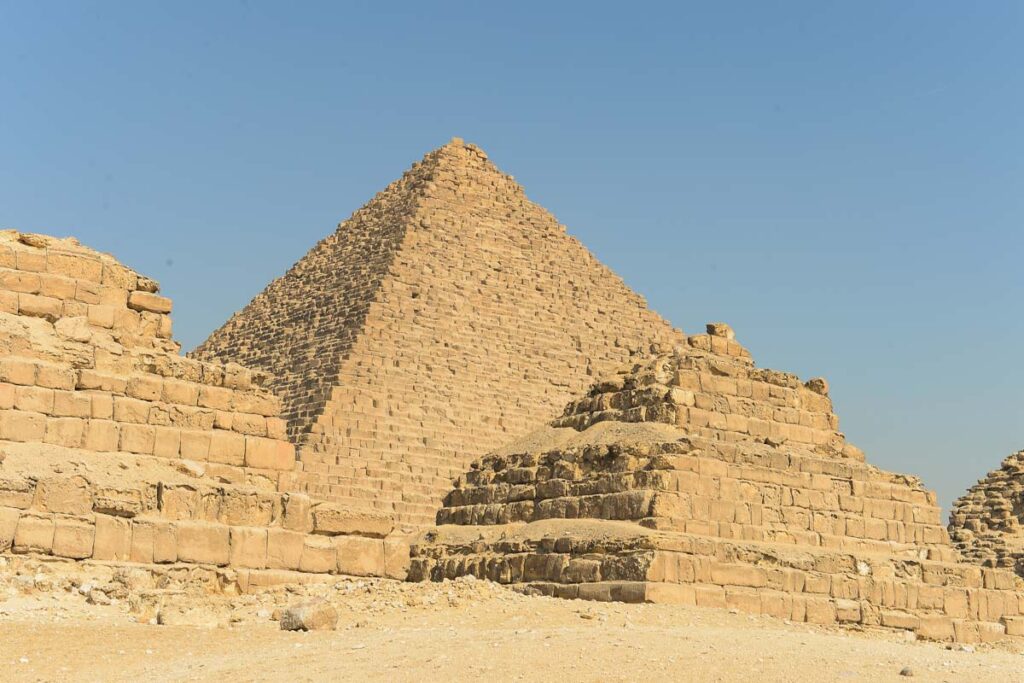
Beyond engineering, the pyramids carried deep spiritual meaning. Their sloping sides symbolized the sun’s rays, guiding the pharaoh’s soul to the heavens. Each was part of a larger complex with temples, causeways and smaller pyramids for queens and family members, reinforcing the ruler’s eternal presence.
The Great Pyramid’s alignment with the cardinal points highlights the Egyptians’ advanced understanding of astronomy. More than monuments, these structures were a bridge between the earthly and the divine, blending science with spirituality.
The Great Pyramid of Giza
The largest of the three pyramids, the Great Pyramid, originally stood at 146 meters but now reaches 138 meters. Built for Pharaoh Khufu, also known as Cheops, it held the title of the tallest man-made structure for over 3,800 years.
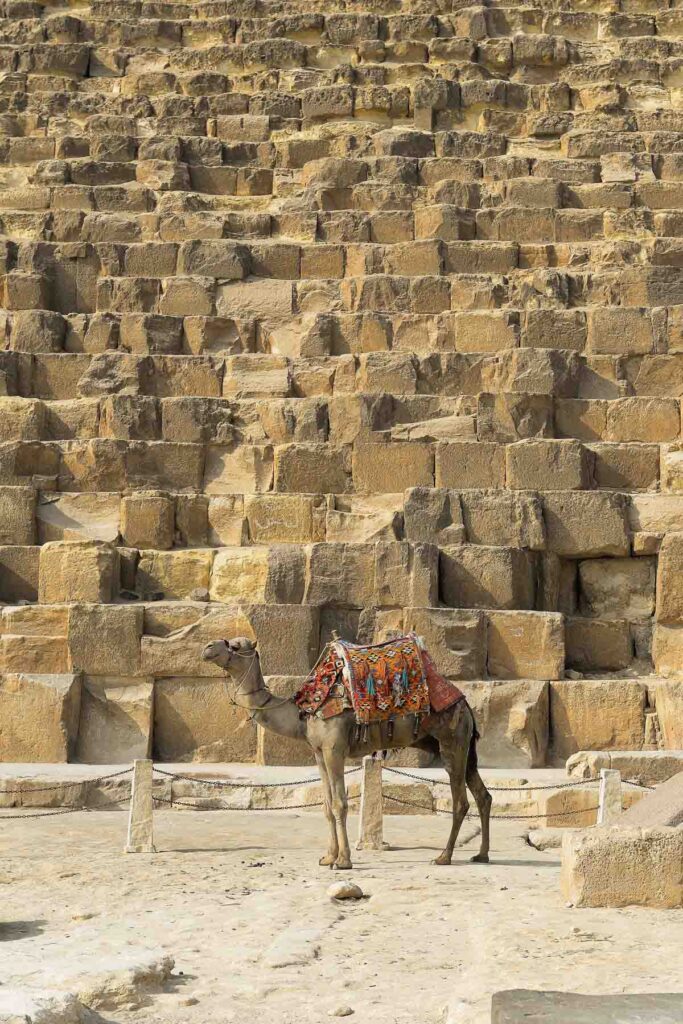
Constructed with over 2.3 million limestone blocks, each weighing between 2.5 and 15 tons, the Great Pyramid’s precise alignment with the cardinal points demonstrates the ancient Egyptians’ advanced knowledge of astronomy.
Tips for Visiting
Just like the Valley of the Kings in Luxor, the pyramids can get busy, really busy, so here are a few tips to make sure you are fully prepared to make the most of them.
- Best Time to Visit – Arriving early in the morning or late in the afternoon is ideal. The midday sun is relentless, washing out details and making photography challenging. Sunrise and sunset offer stunning golden light and a quieter, more immersive experience.
- What to Bring – Trust me, comfortable shoes, sunscreen and plenty of water are essential. The desert heat is intense, and the terrain is vast. Wearing loose, breathable clothing will keep you comfortable while exploring under the desert sun.
- Photography – The best shots of the Great Pyramid happen in the early morning when the shadows bring out intricate details. I like to shoot from a lower angle to capture its sheer scale. Positioning yourself at a distance works best if you want that perfect postcard-worthy photo.
- What to Expect – Walking across the site is no small task, and the uneven terrain can make it tiring. The steps leading into the pyramid are steep and narrow, so if you plan to go inside, be prepared for a bit of a climb. The effort, though, is worth it — nothing compares to standing before these ancient wonders.
The Great Sphinx
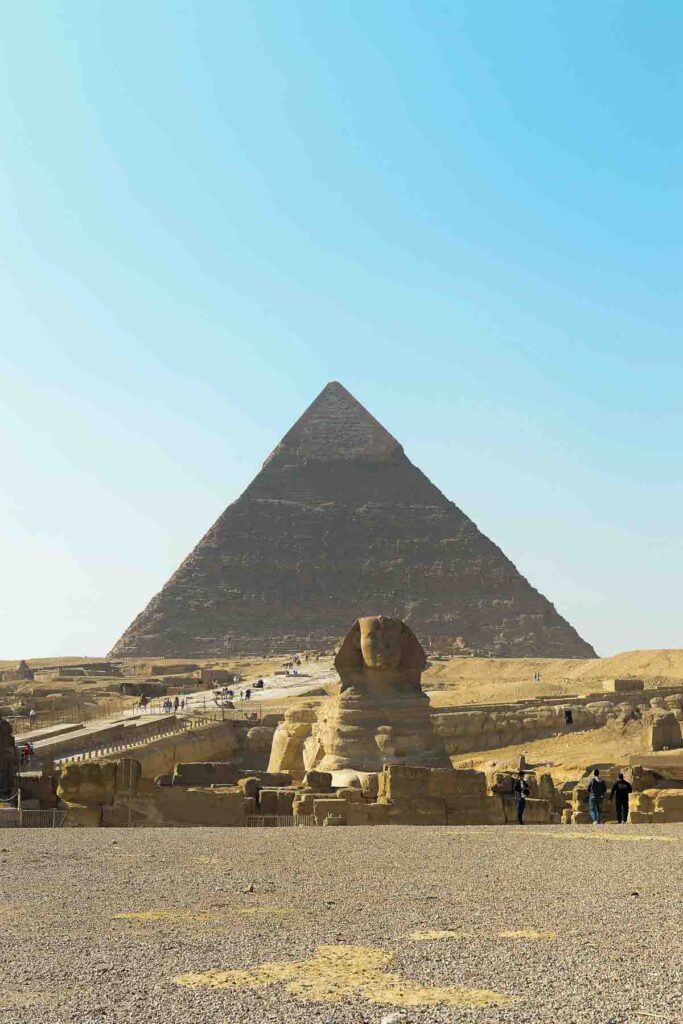
Carved directly from the Giza Plateau’s limestone bedrock, the Sphinx stretches 73 metres in length and stands 20 metres high. It is widely believed to depict Pharaoh Khafre, yet its origins remain debated. Some scholars argue it was built earlier, possibly predating Khafre’s reign. Traces of red pigment suggest it was once painted, adding to its mysterious past.
Aligned to face the rising sun, the Sphinx played a significant role in ancient Egyptian solar worship. Despite centuries of erosion and damage — most notably its missing nose — it remains one of the most enduring symbols of Egypt’s legacy.
Tips for Visiting
- Best Time to Visit – Visiting early or late in the day makes for a more relaxed experience. The morning light highlights the Sphinx’s features beautifully, while evening visits offer a breathtaking view of the nearby Sound and Light Show.
- What to Expect – The Sphinx is awe-inspiring but draws big crowds. I’ve found that patience is key when waiting for that perfect moment to take it all in. Up close, centuries of erosion have softened its features, yet the intricate details of its craftsmanship remain visible. The contrast between its worn limestone surface and its imposing size makes it an even more fascinating relic of the ancient world.
- Photography – For the best shot, I like to photograph it from a distance, capturing both the Sphinx and the Great Pyramid in one frame. The frontal angle aligns perfectly with the pyramid, creating a striking composition. Closer shots are possible, but the full grandeur is best appreciated from afar.
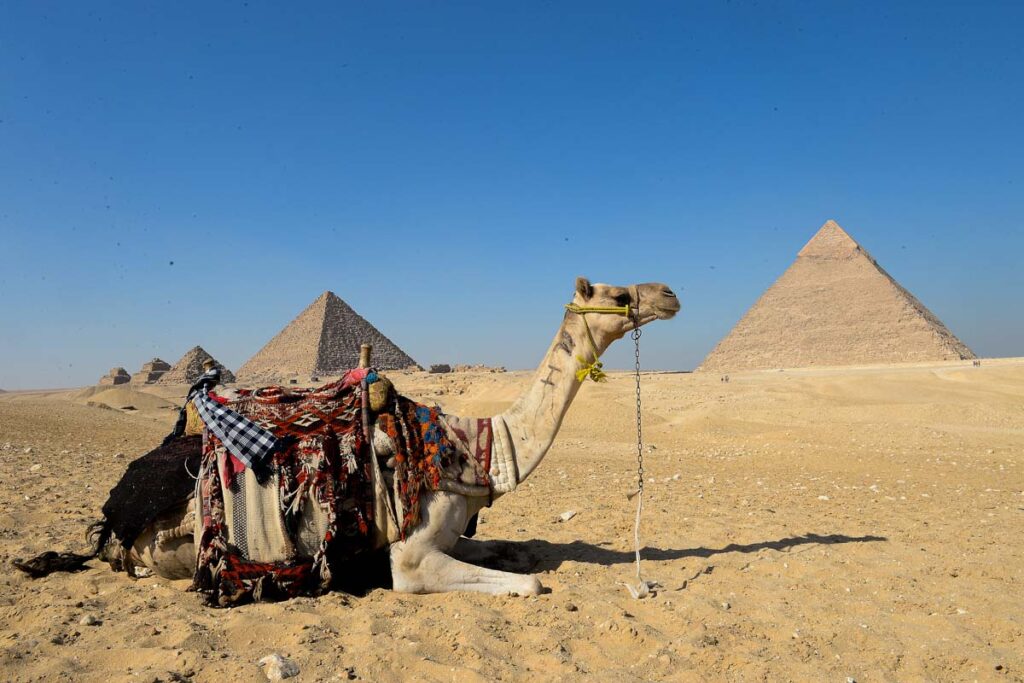
- Avoiding Scams – Vendors offering camel rides or photos for tips are common. Most are harmless, but some can be persistent. Learn to politely decline if you’re not interested, and if you opt for a ride, always agree on a price beforehand to avoid surprises.
Built for Eternity, Standing for History
The Pyramids of Giza are a jaw-dropping reminder of just how ambitious and brilliant humans have always been. Built from more than 2.3 million limestone blocks and perfectly aligned with the cardinal directions, these ancient structures weren’t just tombs—they were feats of engineering so precise, they still leave modern experts scratching their heads.
Their size and precision are mind-blowing, but it’s the mystery that really sticks with you—how did they build them? What haven’t we uncovered yet? Standing in front of them, I couldn’t help but feel small in the best way. It’s a powerful reminder that some things are built to last, not just in stone, but in wonder.